Kedarnath
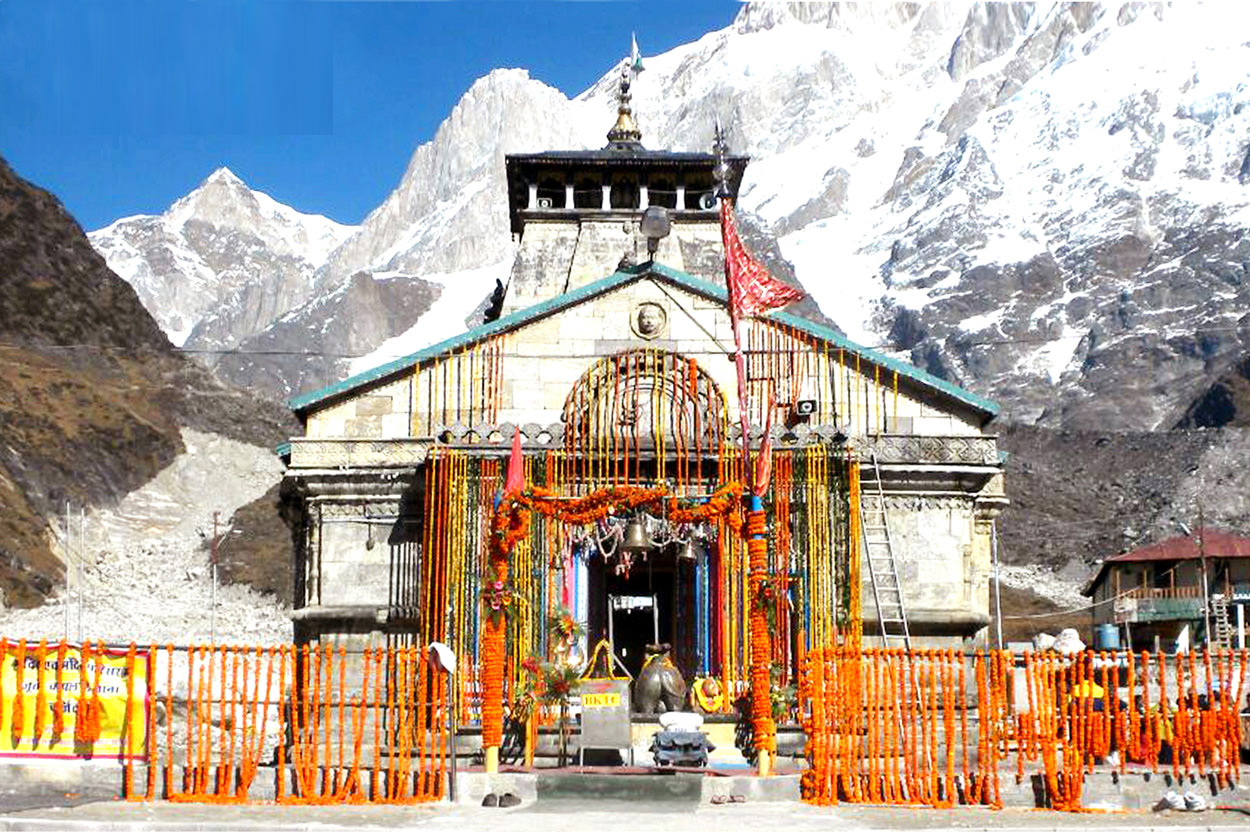


Kedarnath Temple: Kēdāranātha Mandir, lite. 'temple of the ruler of the field') is a Hindu sanctuary (place of worship) devoted to the Hindu God Lord Shiva. The sanctuary is situated on the Garhwal Himalayan reach close to the Mandakini waterway, in the territory of Uttarakhand, India. Because of outrageous climate conditions, the sanctuary is available to the overall population just between the long periods of April (Akshaya Tritiya) and November (Kartik Purnima, the harvest time full moon). During the winters, the vigraha (divinity) from the Kedarnath sanctuary is conveyed down to Ukhimath where the god is adored for the following half-year. Kedarnath is viewed as a homogenous type of Shiva, the 'Ruler of Kedarkhand', the authentic name of the area.
The sanctuary isn't straightforwardly available by street and must be reached by a 22 kilometers (14 mi) uphill trip from Gaurikund. Horse and manchan administration is accessible to arrive at the design. As per Hindu legends, the sanctuary was at first worked by Pandavas and is one of the twelve Jyotirlingas, the holiest Hindu holy places of Shiva. Pandavas should have satisfied Shiva by doing repentance in Kedarnath. The sanctuary is one of the four significant locales in India's Chota Char Dham journey of Northern Himalayas and is the first of the Panch Kedar journey destinations.. This sanctuary is the most noteworthy among the 12 Jyotirlingas. Kedarnath was the most noticeably terrible impacted region during the 2013 glimmer floods in North India. The sanctuary complex, encompassing regions, and Kedarnath town experienced broad harm, however, the sanctuary structure didn't experience any "major" harm, aside from a couple of breaks on one side of the four dividers which was brought about by the streaming flotsam and jetsam from the higher mountains. An enormous stone among the garbage went about as a boundary, shielding the sanctuary from the flood. The encompassing premises and different structures in the market region were intensely harmed.
It is one of the 275 Paadal Petra Sthalams, elucidated in Tevaram, a sacrosanct Tamil Shaivite text composed during the sixth and seventh centuries by 63 holy people called Nayanars. This sanctuary is sung by Thirugnanasambandar, Appar, Sundarar, and Sekkizhar in their Tevaram texts.