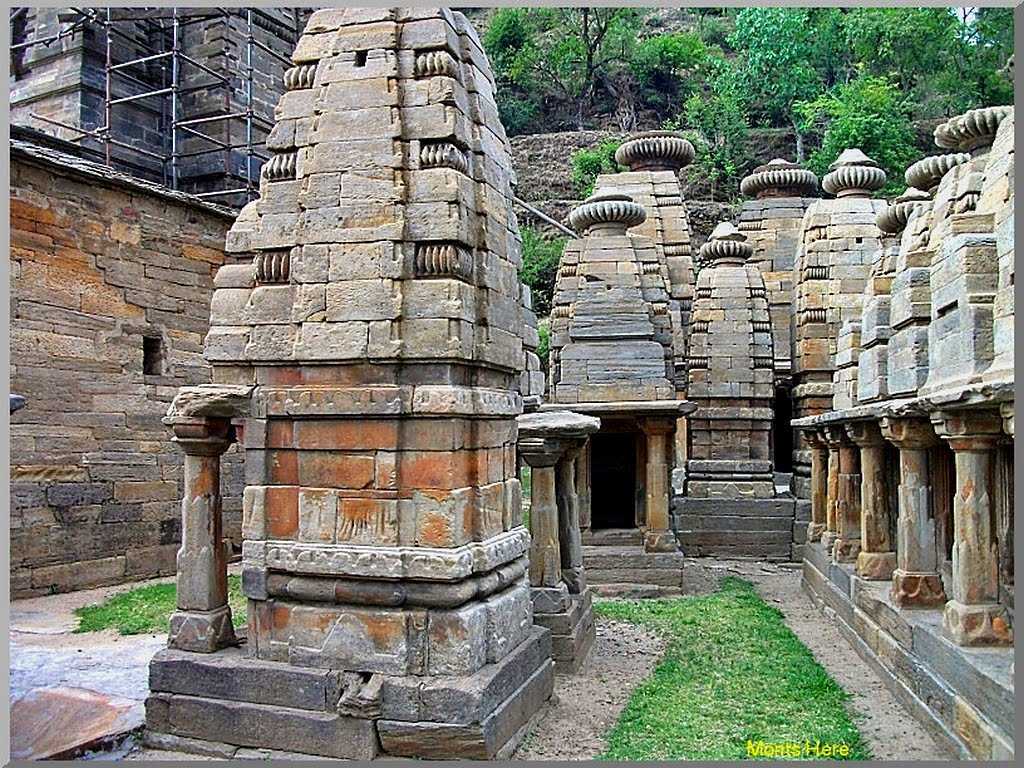
Mukteshwar


Mukteshwar is a village and tourist destination in the Nainital district of Uttarakhand, India. It sits high in the Kumaon Hills at an altitude of 2171meters (7500 feet), 51 km from Nainital, 72 km from Haldwani, and 343 km from Delhi.
Mukteshwar gets its name from a 350-year-old temple of Shiva, known as Mukteshwar Dham, situated atop the highest point in the town, on the veterinary institute's campus. Close to it lie the overhanging cliffs, locally known as Chauli-ki-Jali, used for rock climbing and rappelling, with an excellent view of the valleys below. Mukteshwar is famously known for its breezy waterfalls houses some famous waterfalls such as The Bhalu Ghaad, Tarikhet waterfalls, Rudradhari waterfall, and The Dhokaney waterfall. The sunrise point is at the government-run PWD guest house. Another tourist attraction is the small Satoli Village, situated just 21 km from Mukteshwar. One can also visit the Indian Veterinary Research Institute (IVRI). Mukteshwar is the abode of a saint — Shri Mukteshwar Maharaj ji — who lived at the Top Cottage Temple where his samadhi is. One of his disciples, Swami Sanshudhanand Ji, now stays there.
Love Point at Mukteshwar
Some of the edifices of this town are the IVRI laboratories (experiments on tiny rats, gold-plated books, cattle-sheds), orchards of the Central Institutes of Temperate Horticulture-Regional Station, an expansive deodar forest (Himalayan cedar) measuring 15 square miles, 22 pristine snow-peak views, and the adventure of living among wildlife such as tigers and bears are. The charm of visiting Mukteshwar lies in enjoying nature, listening to air gushing through deodar forests, bird watching, meditation, and seeking peace. The cleanliness, solitude, and nature attract people escaping urban life. Mukteshwar is also home to a post office founded in 1905 which finds mention in Jim Corbett's writing.
View of Himalayas from the top of Mukteshwar
Mukteshwar was previously known as Muktesar (as mentioned in Jim Corbett's book "The Temple Tiger"); the name changed after 1947. Many locals still call it Muktesar in their local language. Until 1893 the place was known for its shrines and temple before it was selected for serum production to protect animals from cattle plague. On the recommendation of the Cattle Plague Commission, the Imperial Bacteriological Laboratory had its genesis on 9 December 1889 at Pune and relocated to Mukteshwar in 1893[4] to facilitate segregation and quarantine of highly contagious organisms. Initially, the laboratory at Mukteshwar was completed in 1898 but destroyed by fire in 1899. It was resurrected in 1901. Then annual expenditure on research was Rs. 50,000.[3] Later it was developed into the Indian Veterinary Research Institute (IVRI), which later moved its headquarters to Izatnagar. Still Mukteshwar serves as the hill campus of IVRI, including facilities such as an experimental goat farm.
The noted Nobel winner scientist Robert Koch visited this place at the request of the government of India. The microscope used by him and other historical articles are kept in the museum maintained by IVRI. A hill-carved cold room dating back to 1900 once used to store biological materials is now a tourist attraction.
Jim Corbett, a well-known author, and hunter of man-eating tigers and leopards visited Mukteshwar. He wrote about Mukteshwar in his book The Temple Tiger and More Man-Eaters of Kumaon. He wrote about the various adversities faced by the people inhabiting the villages in remote areas of the Northern hills.